Does Buying Property in Costa Rica Grant You Residency? (Investor Residency Explained)
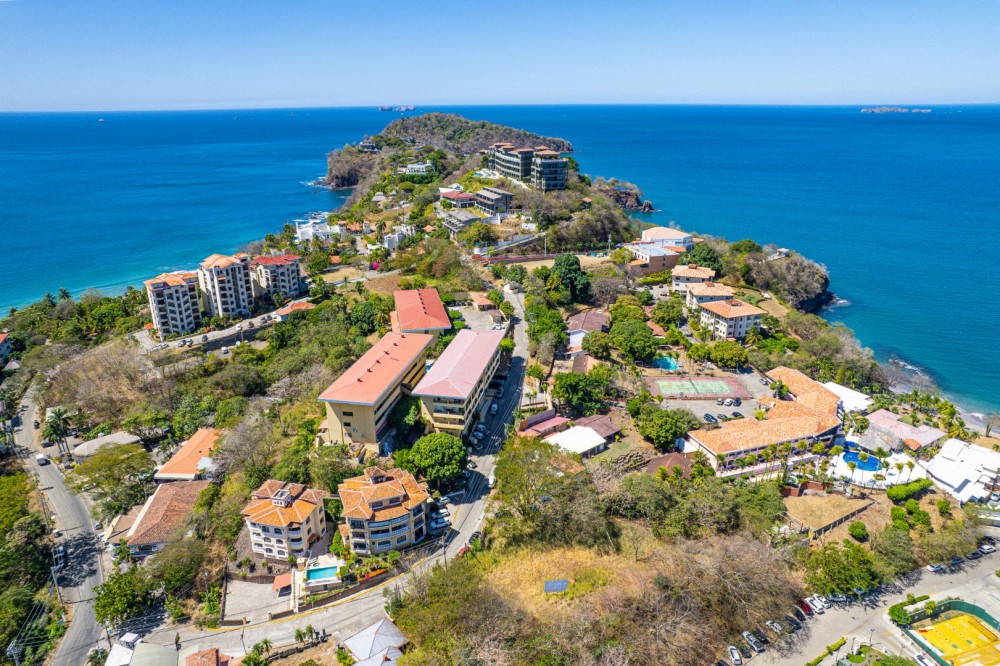
If you are considering buying property in Costa Rica, you may be wondering whether purchasing a home will also give you the right to live in the country permanently.
It is a common question among international buyers exploring beachfront condominiums in Playa Flamingo, family homes in Reserva Conchal or investment properties along Guanacaste's North Pacific coast.
The important distinction is that property ownership and immigration residency are separate legal matters. You can generally purchase properly titled Costa Rican real estate without residency, but completing a purchase does not automatically grant permission to remain in the country indefinitely.
Costa Rica does, however, offer an investor residency pathway through which qualifying real estate may support an application.
In this guide, Coldwell Banker Flamingo explains how the investor category works, what buyers should investigate before purchasing and how to coordinate property due diligence with an immigration application.
The Short Answer: Does Buying a House Grant Residency?
No. Buying a house in Costa Rica does not automatically grant residency.
Foreign nationals can generally own registered private property without first becoming residents, subject to applicable restrictions, particularly in certain coastal areas.
Immigration status is determined separately by Costa Rica's Dirección General de Migración y Extranjería, commonly known as the DGME.
Property ownership may form the basis of an application for temporary residency under the Inversionista, or Investor, category. However, applicants must meet the current investment, documentation and immigration requirements.
This means that purchasing a qualifying property can be relevant to residency, but the purchase itself is not an immigration approval.
For buyers planning to live in Guanacaste long term, it is sensible to discuss both the proposed property and the intended residency application with independent Costa Rican legal advisers before exchanging contracts.
Costa Rica Residency Categories Compared
Costa Rica offers several temporary residency categories. The most appropriate option depends on the applicant's investment, income and personal circumstances.
| Category | Main Financial Basis | Important Consideration |
|---|---|---|
| Investor (Inversionista) | Qualifying investment; US$150,000 appears in published regulations | Investment structure and current eligibility must be verified |
| Rentista | Generally US$2,500 monthly qualifying income | Requires acceptable proof of stable income |
| Pensionado | Generally US$1,000 monthly qualifying pension | Requires evidence of an eligible pension |
| Other temporary categories | Depends on the category | May depend on family relationships or specific authorised activities |
The correct category should be determined through a review of the applicant's circumstances and current immigration rules.
Applicants should not assume that all categories have identical renewal, work or physical-presence conditions.

Investor Residency in Costa Rica: The Property Route
Costa Rica's investor residency category recognises qualifying investments in assets including registered real estate, shares and certain productive projects.
Law 9996 introduced a US$150,000 investor threshold, and that figure remains present in published investor regulations and 2026 administrative documentation.
However, the law's five-year incentive window ended in July 2026. Buyers planning a new application should obtain confirmation of the currently applicable threshold and any available incentives before making a residency-dependent purchase.
The investor route involves more than presenting a purchase agreement. The immigration authority requires documentary evidence supporting the investment and the applicant's eligibility.
Does the Property Need to Generate Rental Income?
Not necessarily. The published investor regulations expressly recognise properly registered real estate as an eligible investment category.
This means a personal-use residential property is not automatically excluded simply because it does not operate as a commercial rental business.
However, the property must satisfy applicable ownership and value requirements, and the applicant must complete the wider immigration process.
For real estate applications, regulations specify that the applicant should be the registered owner. Property held by a separate legal entity cannot automatically be treated as personally owned real estate for this route.
Purchasing through a company may require assessment under different investment provisions.
Real Property Example: Playa Brasilito Investment Listing
Coldwell Banker Flamingo markets a mixed-use property in Playa Brasilito, Santa Cruz, advertised at US$900,000 under MLS reference CR26014184M.
The listing describes five commercial retail units, two apartments and a two-bedroom house.
This is a real property example from the agency's inventory, rather than a fictional residency scenario.
Its published asking price exceeds the US$150,000 amount cited in the investor regulations, but that does not mean a buyer would automatically qualify for residency.
An immigration adviser would still need to confirm the property's ownership structure, qualifying investment value, applicant documentation and the requirements applying to the particular application.
View the Playa Brasilito mixed-use property listing.
For buyers considering other property types, the brokerage also provides Reserva Conchal residential listings and Las Catalinas property opportunities.

Considering a Property Purchase for Residency?
Coldwell Banker Flamingo can help you explore available properties in Guanacaste, while an independent immigration lawyer can assess whether your intended purchase meets the applicable residency requirements.
Contact Coldwell Banker Flamingo or call +506 8723 3789 to discuss your property requirements.
Steps to Apply for Investor Residency
The application process involves preparing both investment evidence and personal immigration documentation.
- Consult an immigration lawyer. Confirm that the intended investment fits the current investor category before committing to a purchase.
- Review the property ownership structure. Determine whether personal registration or another investment arrangement is appropriate.
- Complete property due diligence. Verify title, registered surveys, ownership restrictions, taxes and access arrangements.
- Document the investment. Obtain the required Registry and municipal evidence, including property valuation and tax records where applicable.
- Prepare personal documents. These commonly include passport identification, birth certificates, criminal-record documents and other required evidence.
- Arrange authentication and translation. Foreign documents may require apostilles or legalisation and official Spanish translations.
- Submit the application. Apply through the appropriate immigration procedure with all required supporting documents and fees.
- Complete approval and identification requirements. Follow the authority's instructions concerning registration, healthcare affiliation and the residency identification document, known as DIMEX.
Processing times depend on the application, documentation and immigration authority's workload. Applicants should not rely on a guaranteed approval date.
Before completing a property purchase, also review Coldwell Banker Flamingo's Costa Rica property buying guide.

How Much Does Investor Residency Cost?
The overall budget includes more than the qualifying investment itself.
Applicants may face government processing charges, legal representation fees, document authentication costs, translation expenses and charges associated with obtaining a residency identification document.
Depending on the application, healthcare registration and ongoing contributions may also be required.
Rather than relying on a fixed estimate, request an itemised quotation from a qualified immigration lawyer that identifies:
- Current government application and documentation fees.
- Legal preparation and representation costs.
- Apostille and translation expenses.
- Any applicable DIMEX and registration charges.
- Healthcare and residency renewal requirements.
- Costs of maintaining the qualifying investment.
Property purchase expenses, including applicable transfer taxes, legal services and due diligence, should be budgeted separately.
Can You Buy Property Without Applying for Residency?
Yes. Many foreign buyers purchase homes in Costa Rica without immediately applying for residency.
This may suit someone purchasing a holiday home in Playa Flamingo, an occasional-use condominium in Reserva Conchal or a property intended for investment.
However, ownership does not extend the visitor's authorised immigration stay.
Some nationalities may receive tourist permission for up to 180 days, while others face shorter limits or visa requirements. The permitted stay depends on nationality and the period authorised by immigration authorities.
Property owners must therefore plan their visits in accordance with current immigration rules.
Anyone intending to spend most of the year in Costa Rica should seek advice on an appropriate residency category.

Important Property Ownership Restrictions
Although foreign nationals can generally purchase titled property, coastal ownership requires special attention.
Costa Rica's Maritime Zone legislation applies to certain land near the shoreline.
Subject to statutory exceptions, the Maritime Zone generally covers the first 200 metres inland from the ordinary high-tide line.
The initial 50 metres generally form a public zone, while the following 150 metres may be subject to concession arrangements and restrictions.
For buyers considering beachfront property, independent legal verification is essential.
A concession is not equivalent to an ordinary registered freehold title, and its suitability for a particular investor residency application must be confirmed separately.
For additional guidance, read Coldwell Banker Flamingo's Costa Rica investment property guide.

What Happens If You Sell the Property?
Selling a property that supports temporary investor residency can affect continued eligibility.
Before selling, transferring ownership or restructuring the investment, consult the immigration lawyer responsible for the application.
The relevant question is whether the applicant will continue to satisfy the investment conditions under which residency was granted.
Do not assume that replacing one property with another automatically preserves the original immigration status without further documentation or approval.
Can Investor Residents Work in Costa Rica?
Temporary residency as an investor does not automatically provide unrestricted permission to work for any Costa Rican employer.
Permitted activities depend on the residency category and applicable immigration rules.
Investors intending to manage a business, provide services or accept local employment should obtain specific legal advice before beginning those activities.
Permanent residency generally provides broader employment rights, but eligibility for permanent residency and any later citizenship application is subject to separate requirements.
Why Local Property Experience Matters
Choosing a property that supports your lifestyle while potentially fitting an immigration plan requires coordination between real estate and legal advisers.
Coldwell Banker Flamingo's founder, Gabriel Araya, has more than 21 years of experience in Guanacaste's North Pacific real estate market.
The agency works across Playa Flamingo, Reserva Conchal, Brasilito, Potrero, Mar Vista and surrounding communities.
Its website also includes attributable client feedback from buyers who have completed transactions through the brokerage, including clients in Reserva Conchal.
For example, the Goscha family describes working with Gabriel through three home purchases and one sale. That experience demonstrates repeat client relationships, although it is not evidence of immigration approval or a guarantee of a particular outcome.
Learn more about the Coldwell Banker Flamingo team and its local expertise.
Frequently Asked Questions
Can I Live in Costa Rica If I Buy a House?
Buying a house does not automatically provide permanent residence or extend a tourist stay. Foreign nationals can generally own properly titled property without residency, but anyone intending to live in Costa Rica long term must meet the requirements of an appropriate immigration category.
How Much Do I Need to Invest for Costa Rica Investor Residency?
US$150,000 appears in the published investor regulations and 2026 administrative requirements. However, the five-year incentive period under Law 9996 ended in July 2026. Applicants should obtain current confirmation of the threshold and eligibility requirements from the DGME or a qualified immigration lawyer before purchasing.
Does a Personal Holiday Home Qualify for Investor Residency?
A personal-use home is not automatically excluded. Properly registered real estate is recognised under the investor framework, subject to investment value, ownership and documentary conditions. The specific property's eligibility should be confirmed before the purchase is completed.
Can a Property Owned Through a Corporation Support Residency?
Corporate ownership requires particular care. The published real-estate investment provisions distinguish property registered personally to the applicant from investments held through a legal entity. Company shares may fall under different provisions. Consult an immigration lawyer before deciding how to take title.
How Long Does Investor Residency Last?
Investor residency is a form of temporary residency. The duration, renewal requirements and conditions are determined by applicable immigration rules and the status granted. Eligible temporary residents may apply for permanent residency after meeting the relevant legal requirements, including the applicable period of temporary residence.
Can I Work in Costa Rica With Investor Residency?
Investor temporary residency does not automatically grant unrestricted employment rights. The activities an investor may undertake depend on the immigration category and applicable permissions. Anyone planning to work locally should obtain legal advice before commencing employment or providing services.
What Happens If I Sell My Qualifying Property?
Selling or transferring a property used to support investor residency may affect continued eligibility. Before completing a sale or replacing the asset, consult an immigration lawyer to determine what documentation, approval or change of category may be necessary.
Can I Buy Property in Costa Rica Without Being a Resident?
Yes. Foreign nationals can generally purchase properly titled Costa Rican real estate without obtaining residency first. Coastal properties may be subject to additional restrictions, so buyers should arrange independent legal due diligence before signing a purchase agreement.
Final Thoughts: Property Ownership and Residency Are Separate Decisions
Buying property in Costa Rica can be part of a long-term relocation strategy, but it does not automatically grant residency.
For international buyers considering Guanacaste, the most sensible approach is to evaluate the property purchase and immigration application together while recognising that they involve separate legal requirements.
A qualifying registered investment may support an investor residency application, but approval depends on the applicant meeting the current rules and providing the correct documentation.
Coldwell Banker Flamingo provides local real estate experience across Costa Rica's North Pacific Gold Coast, helping buyers compare properties in Playa Flamingo, Reserva Conchal, Potrero, Brasilito and neighbouring communities.
If you are ready to explore your options, contact Coldwell Banker Flamingo or call +506 8723 3789 for local property guidance and obtain independent immigration advice before committing to a residency-dependent purchase.
This article provides general property and immigration information as of November 2026. Residency thresholds, document requirements and legal interpretations may change. Coldwell Banker Flamingo provides real estate services, not immigration approval or legal representation. Obtain current guidance from Costa Rica's immigration authority and a qualified legal professional.