Buying Property in Costa Rica: The Complete 2026 Guide for Americans & Canadians
The most important thing to know before you start: as an American or Canadian, you have the same property rights in Costa Rica as a Costa Rican citizen. Full, titled ownership. No restrictions on foreign nationals, no residency requirement before you buy, no quota system. The legal framework protecting foreign property buyers is written into the Costa Rican Constitution (Article 19, which guarantees foreign nationals the same individual rights and duties as Costa Ricans) and it makes the country one of the most straightforward places in Latin America to own property abroad.
That said, the process is not without its details. Buying property here involves a Notary Public, a National Property Registry, specific rules around coastal land and a due diligence period that can surface problems if you move too quickly. Getting each stage right is what separates a smooth transaction from a frustrating one.
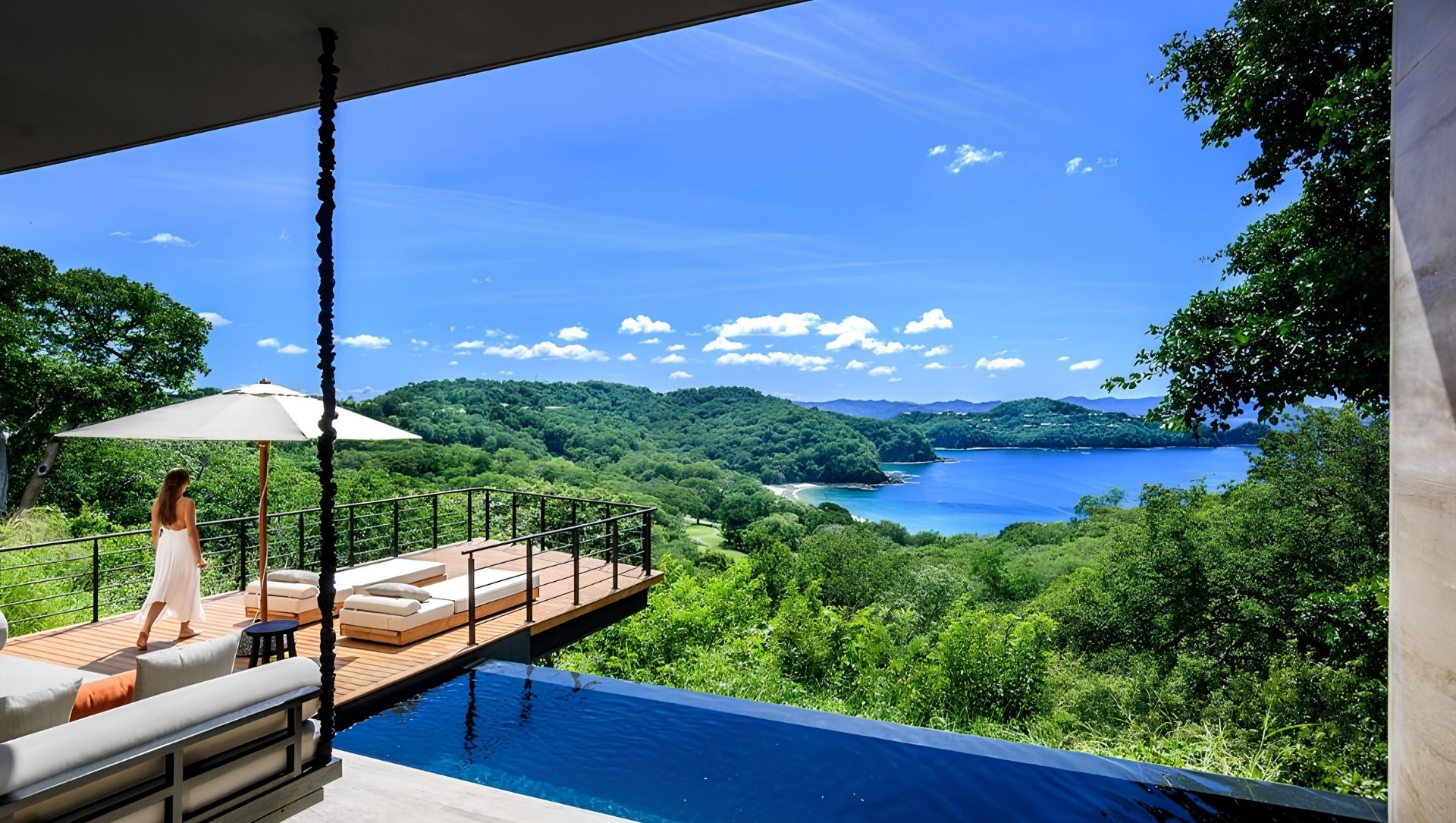
This guide covers the complete process, from legal rights to closing day, specifically for buyers looking at Costa Rica's North Pacific coast and the Guanacaste communities around Playa Flamingo, Reserva Conchal, Las Catalinas, Mar Vista and Pacific Heights.
Can Americans and Canadians Own Property in Costa Rica?
Yes, and with the same ownership rights as Costa Rican citizens. Foreign nationals can purchase titled property in Costa Rica under what is known as "fee simple" title. This is outright ownership: the title is registered in your name or your corporation's name, you can sell when you choose, rent the property, develop it within planning regulations, or pass it to your heirs. It is not leasehold, not a concession, not a timeshare structure.
Residency is not required to purchase. You can buy as a non-resident tourist and the property purchase itself does not automatically grant you residency in Costa Rica (though owning property can support an application under certain investor residency categories, which your immigration attorney can advise on separately).
The one area where different rules apply is the coastal maritime zone. The Maritime Zone Law (Ley de Zona Marítimo Terrestre, Law 6043, 1977) governs all land within 200 metres of the high-tide line. The first 50 metres are public land and cannot be privately owned by anyone. The next 150 metres form the "restricted zone," which can only be held via a municipal concession rather than outright title. For foreigners to hold a restricted zone concession, the holding structure must include at least 51% Costa Rican ownership.
In practice, many of the most sought-after properties on Guanacaste's Gold Coast sit on high ground or set back from the shoreline, carrying clean fee simple titles entirely outside the maritime zone. Reserva Conchal, the hillside communities of Pacific Heights, Mar Vista and much of the developed land around Playa Flamingo fall into this category. Your agent and attorney will confirm the status of any property you are considering from the outset.

What You Can Buy: Property Types in Guanacaste
The Gold Coast offers a range of property types, each with slightly different legal characteristics worth understanding before you start searching.
Titled inland and hillside properties are the most straightforward category. Homes, condos, land parcels and development sites that sit outside the maritime zone carry a registered title in the National Property Registry. The purchase process is clean and well-established and these properties are fully open to foreign buyers on equal terms with locals.
Condominiums and gated communities operate under a condominium regime, similar in principle to HOA structures in the US or Canada. Reserva Conchal is the most well-known example in this area: a private resort community with its own managed facilities, security and maintenance infrastructure. Individual units carry their own title, while the condo regime governs shared spaces and common costs. Reviewing the condominium documents (financial statements, pending assessments and maintenance funds) is part of standard due diligence.
Concession properties in the restricted maritime zone are a different proposition. The concession is granted by the relevant municipality rather than held as private property, meaning it carries renewal conditions, restrictions on use and different financing implications. These require careful legal scrutiny before any offer is made.
Undeveloped land, particularly in more rural or remote locations, warrants additional checks on cadastral boundaries, water rights and any informal occupation by third parties. Buyers interested in raw land should budget for survey work as part of their due diligence costs.

The Step-by-Step Buying Process
Understanding the sequence before you begin avoids surprises and keeps the timeline on track.
Step 1 : Find an agent with verified local market knowledge. Costa Rica does not have a national licensing body for real estate agents comparable to state licensing in the US or the provincial systems in Canada, so choosing your agency carefully is part of the process. Look for established agencies with clear transaction history in your target communities.
Step 2 : Make an offer and sign an Option to Purchase. Once you have identified a property and agreed terms, the offer is typically formalised through an Opción de Compra (Option to Purchase). This preliminary contract reserves the property while due diligence runs. A deposit of 10% of the purchase price is placed with a reputable escrow company at this stage, not paid directly to the seller.
Step 3 : Appoint your own independent attorney. Your attorney in Costa Rica must be a licensed Notary Public, a certification separate from a standard law degree. They will conduct a full title search through the National Property Registry (Registro Nacional), verify there are no outstanding liens or encumbrances, review zoning and cadastral records and confirm building permits on any structures. Use your own attorney, not the seller's. The two roles involve opposing interests and should never overlap.
Step 4 : Complete the due diligence period. For most transactions, this runs 30 to 60 days. Your attorney leads this process, coordinating with municipal offices and the registry as needed. For coastal properties, confirming maritime zone status and any concession terms is part of this phase. For land parcels, boundary verification and a review of any existing occupation matter more.
Step 5 : Close the transaction. When due diligence is complete and both parties are satisfied, the Notary Public drafts the transfer deed (escritura de traspaso). Buyer and seller sign in the Notary's presence. The Notary then submits the deed to the National Registry, which records the transfer and formally completes the change of ownership. Registry processing typically takes several weeks after signing, but your rights are protected from the date the deed is executed.
A straightforward transaction, with no complications surfaced during due diligence, typically runs 45 to 90 days from accepted offer to registered title. Complex or contested situations take longer.

The Costs: What to Budget For
The cost of buying property in Costa Rica is predictable and, by international comparison, low. Here is what you should expect.
Transfer tax is set at 1.5% of the property's registered value (Impuesto sobre Traspasos de Bienes Inmuebles, Law 6999), calculated on the higher of the sale price or the registered fiscal value, and is paid at closing. Legal and Notary fees typically run 1% to 1.5% of the transaction value, depending on complexity. Registration fees at the National Registry add approximately 0.5%. Together, these core mandatory closing costs typically land between 4% and 4.3% of the purchase price. Once escrow fees, due diligence and any corporate structuring are added, a foreign buyer's total out-of-pocket cost more commonly falls in the 4.5% to 5.5% range. Your attorney should provide you with a full cost estimate before you sign the Option to Purchase.
On an ongoing basis, annual property tax in Costa Rica is 0.25% of the registered value, payable to the municipal government (Ley de Impuesto sobre Bienes Inmuebles, Law 7509). This is low relative to property taxes in the US and Canada.
Capital gains tax was introduced in 2019 under Law 9635 (Ley de Fortalecimiento de las Finanzas Públicas), set at 15% on profits from the sale of property. Important exceptions and transitional rules apply, particularly for properties acquired before the law's effective date. The sale of a primary residence is exempt from capital gains tax. And owners who acquired their property before the law took effect on 1 July 2019 can elect a one-time alternative of 2.25% on the gross sale price instead of 15% on the profit, whichever works out lower. If you are purchasing as an investment with the intent to sell, discuss the capital gains implications with your Costa Rican attorney and your accountant in your home country. For Canadian buyers particularly, tax obligations on overseas property and gains involve Canadian tax law and may differ significantly from the US treatment.

The Maritime Zone: What Coastal Buyers Must Understand
The Maritime Zone Law is the single most important piece of legislation for anyone buying near the beach in Costa Rica and it deserves a section of its own.
Law 6043, passed in 1977, divides coastal land into two regulated zones. The first 50 metres from the high-tide line is designated public land (zona pública). No one can own it privately, regardless of nationality or wealth. The next 150 metres form the restricted zone (zona restringida). Land in this zone cannot be privately titled; it can only be held under a concession granted by the relevant municipal authority.
For foreigners seeking a restricted zone concession, the holding structure must have at least 51% Costa Rican ownership. This means setting up a local corporation with Costa Rican partners or shareholders, which adds legal complexity and cost compared to a standard titled property purchase.
Not all coastal or beachside properties fall within this zone. Many of the best properties on Guanacaste's Gold Coast, including hillside homes with ocean views, inland communities set back from the shore and gated developments built on titled land, sit entirely outside the maritime zone and carry clean fee simple titles. Before committing to any property near the coast, your attorney should confirm its exact legal classification, the distance from the high-tide line and whether any part of the land touches the restricted zone.

Using a Corporation to Hold Property
Holding Costa Rican property through a local legal entity is common among both foreign and domestic buyers. The two main structures are the Sociedad Anónima (S.A.) and the Sociedad de Responsabilidad Limitada (S.R.L.). Neither is legally required for an inland titled purchase, but each offers practical advantages worth considering.
Estate planning becomes simpler when property is held in a corporation: shares transfer rather than the property title itself, which can reduce the cost and complexity of passing the property on. Limited personal liability is another benefit, as is easier management of the asset from abroad: the corporation can hold a Costa Rican bank account, simplifying utility payments, local transactions and any future rental activity.
For maritime zone concessions held by foreigners, as noted above, using a corporation is necessary and the 51% Costa Rican ownership requirement shapes how that structure is set up. Your attorney can advise on the right structure for your situation, including the one-time formation costs and ongoing annual corporate tax and filing obligations.
If you are thinking about buying on Guanacaste's North Pacific coast, the Coldwell Banker Flamingo team has been working across the Flamingo-Conchal corridor for over 21 years. The communities around Playa Flamingo, Reserva Conchal, Pacific Heights, Mar Vista, Las Catalinas and the surrounding area are territory we know in detail. Browse current listings or contact us to discuss what you are looking for.

Financing: How Most Buyers Pay
The majority of North American buyers purchasing property in Costa Rica either pay in cash or arrange financing through products available in their home country.
US and Canadian mortgage lenders do not typically take security against Costa Rican property, so buyers who need financing often draw on home equity products in the US or Canada, or fund the purchase from savings or investment accounts. Some buyers use proceeds from a property sale at home.
Costa Rican banks do offer mortgage products, but access for non-residents is limited in practice. The process requires documented legal residency, extensive income verification and local credit history. Interest rates on local mortgages tend to be higher than North American buyers are used to. It is possible, but not the common path for foreign buyers in this market.
Seller financing appears on some listings, particularly on higher-priced homes and land parcels where the seller has flexibility. If seller financing is part of a deal you are considering, your attorney should structure the security provisions carefully and review the terms in full before you sign anything.

What Your Attorney Should Check: Due Diligence in Detail
Due diligence in Costa Rica is attorney-led and the thoroughness of that process is your primary protection as a buyer. Here is what a complete review should cover.
The title search through the Registro Nacional establishes who holds the title, traces the ownership history and confirms there are no outstanding mortgages, liens, or encumbrances registered against the property. For Guanacaste properties in particular, checking for any registered annotations (legal notes attached to the title) is standard.
The cadastral plan review compares the registered boundaries against the physical land. Discrepancies between what is on paper and what exists on the ground are not unusual and can signal encroachments, historical boundary disputes, or title errors that need resolving before purchase.
Municipal zoning confirms what the land is classified for (residential, agricultural, commercial, protected) and under what conditions development is permitted. Building permit verification checks that any existing structures were legally constructed with the appropriate approvals in place.
For rural or agricultural land, confirming water rights (derechos de agua) is important, particularly where access to a municipal water supply is not guaranteed and a well or private water concession is in use.
Properties near the coast require specific confirmation of their distance from the high-tide line and their classification under the Maritime Zone Law. For concession properties, your attorney should review the concession terms, any conditions attached to it and its renewal status.
For condominium or gated community properties, reviewing the condo regime documentation, the HOA financial statements, pending maintenance assessments and any outstanding disputes is standard practice.

Common Mistakes and How to Avoid Them
Most problems with Costa Rican property purchases come from the same small set of errors.
Using the seller's attorney is the most common and the most avoidable. Your attorney and the seller's attorney have opposing interests in the transaction. A single attorney cannot properly serve both sides.
Rushing due diligence to speed up a transaction introduces risk on every dimension: title issues, maritime zone problems, zoning violations and unpermitted structures. Slowing down at this stage is almost always the right call.
Not confirming maritime zone status before making an offer on a coastal property is a specific and costly mistake. Knowing what you are buying before the Option to Purchase is signed, not after, keeps your options open.
On undeveloped land, particularly in rural locations, confirming that the parcel is free from informal occupation is worth the site visit. Squatters' rights (posesión) in Costa Rica can create legal complications on land that has been physically occupied but not developed, even where the registered title is clean.
And not accounting for ongoing costs is a broader mistake many buyers make. Annual property tax at 0.25%, HOA or condo fees where applicable, property management if you plan to rent, maintenance and utilities in a tropical climate: these are real and recurring costs that belong in your financial model before you commit.

Frequently Asked Questions
Can foreigners own property in Costa Rica?
Yes. American and Canadian nationals can own property in Costa Rica with full fee simple title, carrying the same rights as Costa Rican citizens: the right to use, sell, develop, rent, or pass the property to heirs. There is no residency requirement and no restriction on foreign ownership of inland titled property. The exception applies within the maritime zone: the 50 metres closest to the high-tide line are public land and the following 150 metres can only be held via a municipal concession. Many of the best properties on Guanacaste's Gold Coast sit outside the maritime zone entirely and are available on standard titled terms.
How much does it cost to buy property in Costa Rica?
Closing costs typically run between 4% and 4.5% of the purchase price. This covers transfer tax (1.5% of the registered property value), legal and Notary fees (approximately 1% to 1.5%) and National Registry registration fees (approximately 0.5%). Your attorney should provide a full cost breakdown before you sign the Option to Purchase. Annual property tax is 0.25% of the registered value per year, which is low compared to rates in the US and Canada. Capital gains tax at 15% applies when you sell, with transitional exceptions. Canadian and US buyers should also take advice from their home-country accountant on how overseas property income and gains are treated under their own tax rules.
Do I need a lawyer to buy property in Costa Rica?
Yes, and specifically one who holds a Notary Public certification in Costa Rica, which is a separate qualification from a standard law degree. The Notary is responsible for conducting the title search, drafting the transfer deed and registering the transaction with the National Registry. Beyond the legal requirement, having your own independent attorney is essential protection: they act in your interest, not the seller's. Trying to share an attorney with the other side of the transaction is not advisable and can leave you exposed if anything goes wrong during due diligence.
Can Americans get a mortgage in Costa Rica?
Most American buyers in this market pay cash or use financing arranged in the US, such as a home equity line of credit secured against a US property. Costa Rican banks can offer mortgages, but the process for non-residents is lengthy and documentation-heavy and interest rates are higher than North American buyers are used to. US mortgage lenders do not typically secure against Costa Rican property. Seller financing is available on some listings and can be a practical option, provided it is properly documented and structured by your attorney. Canadians are in a similar position: local Costa Rican financing is an option in principle, but rarely the practical choice for non-residents.
What are the main risks of buying property in Costa Rica?
The most common risks all relate to insufficient due diligence: a title with unresolved encumbrances, a coastal property with unclear maritime zone status, structures built without permits, or undeveloped land with informal occupation by third parties. These risks are manageable, but only if your attorney runs a thorough process before you commit. Bypassing due diligence to speed a transaction is where most problems originate. Using your own independent attorney, verifying the property's legal status fully and confirming coastal classifications before signing anything eliminates the majority of risk.

Ready to Buy on Costa Rica's Gold Coast?
The legal framework for buying property in Costa Rica is genuinely favourable for foreign buyers. Full ownership rights, a predictable legal process, low ongoing costs and 21 years of transaction history on Guanacaste's North Pacific coast: the fundamentals are sound.
Getting it right comes down to professional support and proper due diligence. The buying process is well-established; the key is moving through it with people who know the local market, the legal requirements and the specific communities you are looking at.
The Coldwell Banker Flamingo team has been working across Playa Flamingo, Reserva Conchal, Pacific Heights, Mar Vista, Las Catalinas, Potrero and Brasilito since 2025, backed by the $260M+ annual sales network of Coldwell Banker Costa Rica. Browse our current listings or contact us directly to talk through what you are looking for. The best properties in this market rarely wait long.