Retire to Costa Rica: Residency, Healthcare, Costs and Guanacaste Retirement Communities

Retiring to Costa Rica is not simply a residency or real-estate question. It is a long-term living decision: healthcare, mobility, true monthly costs, travel back to family, maintenance, social life and whether the community will continue to fit as your priorities change.
For many US and Canadian retirees, Guanacaste makes the shortlist because of its coastal lifestyle, established international communities and access to Guanacaste Airport (LIR), which currently lists direct destinations across the United States and Canada. For the region first, read our Guanacaste real estate guide; this article focuses on retirement feasibility.
Key Takeaways for Retirement Planning
- Residency, tax residency and property ownership are different issues; treat them separately.
- Pensionado, Rentista and Inversionista are routes to investigate, but documentation and personal eligibility matter as much as the headline thresholds.
- Build retirement housing around healthcare access, mobility, maintenance and transportation, not only view and price.
- Model the full cost of ownership, including HOA/condo fees, utilities, insurance, maintenance and healthcare.
- An extended winter or green-season stay can be valuable due diligence before committing to full-time ownership.
Can You Retire in Costa Rica Without Buying Property?
Yes. Residency and home ownership are separate. You can rent while establishing residency, buy before becoming a resident, spend only part of the year in Costa Rica, or live in the region for an extended test period before deciding whether ownership makes sense.
If buying becomes part of the plan, our complete Costa Rica buying guide explains title, Maritime Zone rules, due diligence and closing considerations for US and Canadian buyers.
Costa Rica Retirement Residency: Pensionado, Rentista and Inversionista
Costa Rica’s General Immigration Law 8764 provides temporary-residency categories that are commonly relevant to retirees and financially independent applicants. Always confirm current documentation and processing requirements before applying.
Pensionado
Pensionado requires proof of a permanent, stable pension from abroad of at least US$1,000 per month. For retirees receiving Social Security, CPP/OAS or another qualifying lifetime pension, this is often the first category to investigate. The source and permanence of the pension must meet the immigration requirements; the monthly number alone is not the entire application.
Rentista
Rentista requires at least US$2,500 per month in qualifying permanent, stable income under Law 8764. The way that income is documented matters, so confirm the evidence required for your specific source of funds.
Inversionista
Under the current regulation, Inversionista residency can be available with a qualifying Costa Rican investment of at least US$150,000, including certain real estate and other eligible investments. The current regulation also requires the qualifying investment to be maintained for renewal. Do not assume that a purchase at or above that price automatically completes an immigration application; structure and documentation matter.
Important distinction: Immigration residency does not automatically make you a Costa Rican tax resident. Law 9996 says investor, pensionado and rentista status is not automatic tax residency. Have a qualified tax adviser assess the actual Costa Rican and home-country rules that apply to you.

Healthcare in Retirement: Public, Private or Both?
Costa Rica has a public healthcare system operated by the CCSS / Caja and a substantial private medical sector. Law 8764 provides that temporary residents generally must show continuous CCSS insurance when applicable to renew residency. Many international residents also use private physicians, private insurance or self-pay private care for convenience and provider choice.
For retirement planning, the useful question is not “Does Costa Rica have healthcare?” It does. The useful questions are: what care do you personally expect to use, how often, and how far are you willing to drive for it?
- Hospital Metropolitano – Huacas is one of the main private healthcare options serving the Flamingo–Brasilito–Huacas area. Its Huacas location is in Cabo Velas next to the fire station, and Hospital Metropolitano lists 24-hour emergency care at its Huacas facility, along with general medicine and access to other medical specialties through its broader network.
- Hospital San Rafael Arcángel in Liberia provides 24-hour emergency care, hospitalization, surgery, diagnostic imaging, laboratory services, pharmacy and a broad range of medical specialties.
- There are also numerous smaller private clinics, physicians’ offices, dental practices, laboratories and pharmacies throughout the Flamingo, Brasilito, Huacas, Potrero and Tamarindo corridor, so routine medical care and prescriptions are generally available without travelling to Liberia.
If you have ongoing specialist appointments, mobility limitations, chronic medications or other specific medical needs, verify the exact provider, pharmacy, hospital and drive time before buying. Healthcare convenience should be a property-search criterion, not a question you investigate after closing.
What Does Retirement in Guanacaste Actually Cost?
There is no single honest “cost of living in Costa Rica” figure. A couple in a paid-off condominium has a completely different budget from a household maintaining a large ocean-view home with a pool, vehicle, staff, private insurance and frequent international travel.
Build the retirement budget from the categories that apply to your life:
- Housing: purchase price or rent, HOA/condominium fees, insurance and municipal property tax. The general annual property tax rate is 25% of registered taxable value under Law 7509.
- Home operation: electricity, water, internet, pool/garden service, repairs, preventive maintenance and replacement reserves. Air conditioning and the scale of the property can materially change this number.
- Healthcare: CCSS contributions where applicable, private insurance, prescriptions and self-pay/private-care costs.
- Transportation: vehicle purchase or lease, insurance, registration, fuel, maintenance and taxi/private-driver use if desired.
- Lifestyle: restaurants, golf, boating/marina use, fitness, travel, household help and entertainment.
- Home-country obligations: tax reporting/advice, trips back to family and the cost of maintaining property, insurance or memberships abroad.
Use a full monthly and annual model. “Low property taxes” do not make an expensive property cheap to own if HOA fees, maintenance, insurance and lifestyle costs are high.
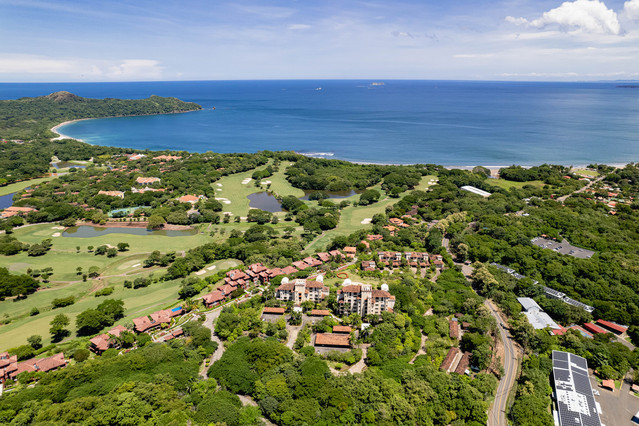
Costa Rica Retirement Communities in Guanacaste: Compare Lifestyle, Not Just Price
Playa Flamingo: a central coastal base for buyers who want beach, marina activity, restaurants and services nearby. Read the Playa Flamingo buyer’s guide or browse Flamingo homes for sale.
Reserva Conchal: managed resort living with golf, beach access, security and a maintained amenity environment. The trade-off is more community structure in exchange for less to manage personally. Browse Reserva Conchal listings.
Las Catalinas: a deliberately walkable village model that can be attractive when daily movement and reduced car dependence are priorities. Browse Las Catalinas real estate.
Mar Vista: gated hillside living with views and residential infrastructure. For the full community picture, read our Mar Vista guide or browse Mar Vista real estate.
Potrero & Surfside: a more residential coastal rhythm just north of Flamingo, with daily services and less of a resort feel. Browse Potrero & Surfside listings.
Pacific Heights and Brasilito: compare Pacific Heights for elevated ocean-view inventory and Brasilito for a more local town environment.
Wintering in Costa Rica Before Retiring Full-Time
For many North American buyers, an extended seasonal stay is better due diligence than a rushed permanent move. Live as normally as possible: grocery shop, drive at night, make routine medical trips, use the internet for work or calls, and test how much you actually use the amenities you think you need.
If year-round living is a possibility, experience at least part of the green/rainy season before deciding. A community that works in February may feel different in September. If you are remaining a seasonal visitor rather than a resident, confirm the current immigration entry rules and tax implications for your pattern of presence rather than relying on an old “90-day” or “180-day” blog post.
For the budget side, use our 2026 Cost of Living guide. For seasonal conditions and maintenance implications, see the Guanacaste Weather guide.
Owning a Retirement Home: Maintenance Is a Lifestyle Decision
One of the most important questions is not “Can I afford this house?” but “Do I want to manage this house ten years from now?” Large hillside estates, pools, expansive gardens and detailed exterior finishes can be wonderful—and they create maintenance, staffing and coordination.
A condominium or managed community may exchange some autonomy for simplicity. A walkable village may reduce driving. A central location may make healthcare and errands easier. The best retirement property is often the one that will still feel easy as your priorities change.

The Nicoya Blue Zone: Useful Context, Not a Health Promise
The Nicoya Peninsula became internationally known for historical longevity patterns. Our Costa Rica Blue Zone article reviews the research and the more nuanced evidence behind the marketing story.
The practical retirement lesson is not that a Costa Rica address guarantees longevity. It is that the built and social environment can make certain routines—walking, outdoor time, social connection and purposeful activity—easier or harder. That is a legitimate community-selection factor; it is not a medical claim.
Buying vs. Renting in Retirement
Renting preserves flexibility and is a strong way to test a community. Buying gives you control and can make sense once you know where you want to be over the long term. Neither is inherently better.
If Guanacaste is new to you, an extended rental can reveal more than another week of property tours. If you have returned to the same community for years and know its year-round rhythm, ownership may be the logical next step.
Retirement Property Checklist: Questions to Ask Before You Buy
- How far is the exact property from the clinic, hospital, pharmacy and specialists you are likely to use?
- How many stairs are part of normal daily life? Is there a realistic bedroom/bathroom arrangement if mobility changes?
- Can you comfortably reach groceries, restaurants and activities without driving every time?
- What is the complete annual cost after HOA fees, insurance, electricity, pool/garden care and maintenance reserves?
- Who manages the property when you travel?
- How reliable are internet, water and electricity at this exact property, and what backup systems exist?
- Are short-term rentals allowed if you want income while away?
- What will be involved in selling later, and how broad is the likely future buyer pool?
- Does the home still make sense if you spend more months in Costa Rica—or fewer?
- Have your immigration, estate-planning and cross-border tax advisers reviewed the structure you plan to use?
Frequently Asked Questions
How much pension income do I need for Pensionado residency?
Law 8764 sets the Pensionado minimum at US$1,000 per month in permanent, stable pension income from abroad. Confirm current documentation before applying.
How much income is required for Rentista residency?
Law 8764 sets a minimum of US$2,500 per month in qualifying permanent, stable income. Documentation requirements matter as much as the amount.
What is the current investment threshold for Inversionista residency?
The current regulation sets the qualifying investment minimum at US$150,000 for eligible investments. The investment and documentation must meet the regulation.
Do I need residency to buy a retirement home?
Generally no for standard titled property. Buying and immigration are separate processes.
Will I have access to public healthcare?
Temporary residents generally must maintain CCSS coverage when applicable for renewal. Many international residents also use private care. Your actual healthcare plan should be built around personal needs and provider access.
What are the best retirement communities in Guanacaste?
There is no universal best. Flamingo is central and service-rich; Reserva Conchal is resort-managed; Las Catalinas emphasizes walkability; Mar Vista offers gated hillside living; Potrero and Surfside provide a more residential coastal rhythm.
How much are property taxes in Costa Rica?
The general municipal property tax rate is 0.25% of registered taxable value. HOA/condominium fees and operating costs may be much larger recurring expenses.
Can I spend only the winter in Costa Rica?
Yes, many people test or use Guanacaste seasonally. Confirm the current immigration entry rules and tax implications for your exact pattern of presence.
Should I buy before I retire full-time?
Only when you know the region and community well enough to understand daily life, not just vacation life. Otherwise, a longer rental period is valuable due diligence.
Related CBF Guides
- Cost of Living in Costa Rica: 2026 Expat & Retiree Guide — realistic budget categories and Gold Coast differences.
- Guanacaste Weather: 2026 Guide — seasonal conditions and property-maintenance implications.
- Costa Rica's Blue Zone Explained — the evidence behind the longevity story and what it does—and does not—mean.
- Reserva Conchal: Real Estate, Community & Life Inside the Resort — a lower-friction managed-community model to compare.
Ready to Explore Retirement Property in Guanacaste?
Retiring in Costa Rica is not only about qualifying for residency or affording a home. The long-term question is whether the community and property make your everyday life easier, connected and financially comfortable as your needs evolve.
Explore current Costa Rica properties, compare Guanacaste homes, or contact Coldwell Banker Flamingo and tell us how you actually want to live in retirement. That lifestyle brief is more useful than a bedroom count alone.
Important: This article is general information, not immigration, legal, tax or medical advice. Requirements and administrative practices can change. Verify your circumstances with the appropriate qualified professionals and healthcare providers.